
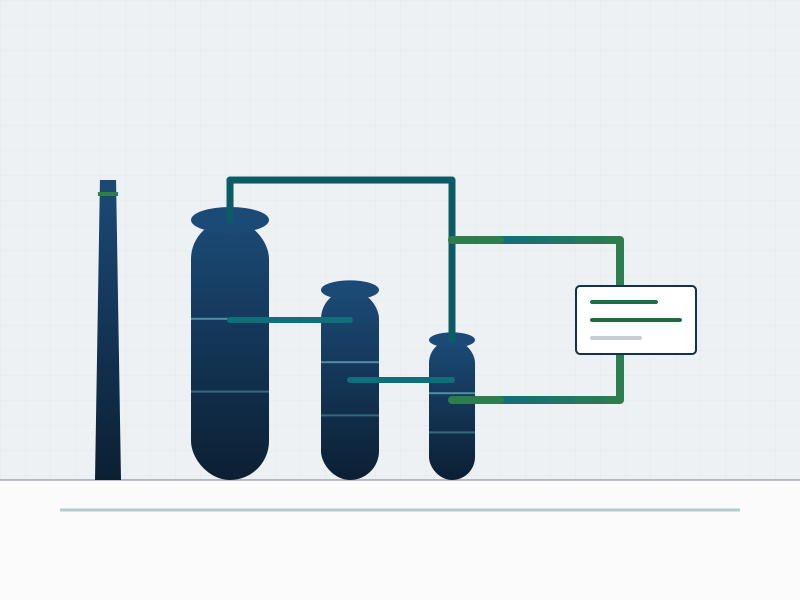
Process sites usually know where the energy goes. The difficulty is that the obvious interventions touch systems where a change has safety consequences — fired heaters, steam systems, pressure equipment, hazardous areas — and the engineering effort to make a change safely is the real cost.
What this changes about the work
- Management of change is part of the scope from the beginning. Anything altering a process condition, a relief case or a hazardous area classification is treated as a process safety matter first.
- Relief and overpressure implications are checked before an efficiency measure is recommended, not after it is installed.
- Electrification studies address the constraint that usually decides them — available electrical capacity and grid connection lead time — rather than treating them as a fuel-switching arithmetic exercise.
- Heat integration is assessed across the site, because the value is usually in the links between units rather than within them.
What we look for
- Steam system losses: failed traps, uninsulated runs, flash steam vented, condensate not returned
- Fired equipment operating away from its design point
- Heat rejected at a temperature that is still useful somewhere else on site
- Ageing assets where replacement is coming anyway and the decarbonisation decision should be taken now rather than deferred into a like-for-like swap
Review requirements
Work touching process safety, pressure systems, relief cases or hazardous area classification goes to specialist process safety review. Where a measure would require a relief study we say so at the point of recommendation, because it changes the cost and the programme.